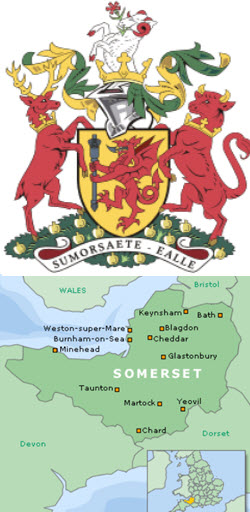
Welcome to Somerset, a county rife with military history. To live in Somerset is to live in a museum. There is important history where ever you turn.
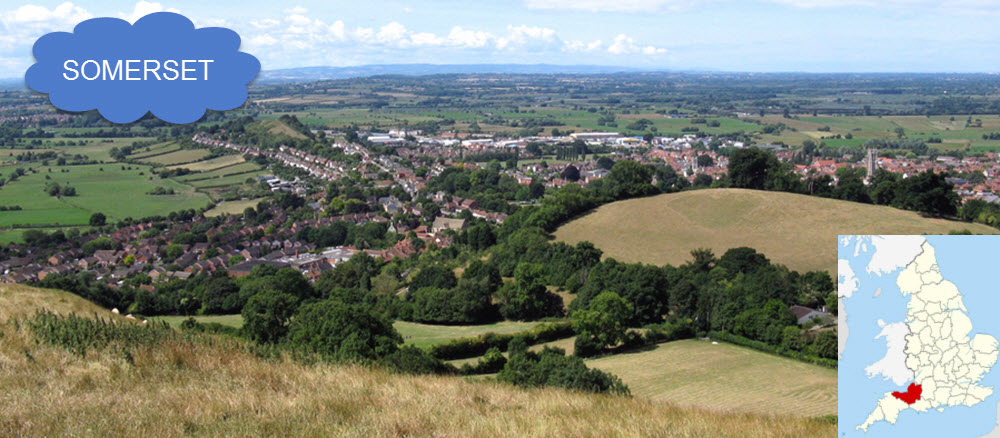
Somerset is located in South West England, with Gloucestershire, Bristol, Wiltshire, Dorset and Devon as its closest neighbours. To the north and west lies the Severn Estuary and the Bristol Channel, and towards the border to Gloucestershire is the River Avon. It is not difficult to understand why Somerset has attracted residents since prehistoric times and why it has played such as crucial role in British military history.
Somerset played a decisive part in the consolidation of power and rise of King Alfred the Great, who successfully defended his kingdom against the Vikings and by the time of his death in 899 AD was the dominant rules in England. Events that took place in Somerset were also of outermost importance to the outcome of the English Civil War and the Monmouth Rebellion.
Hillforts
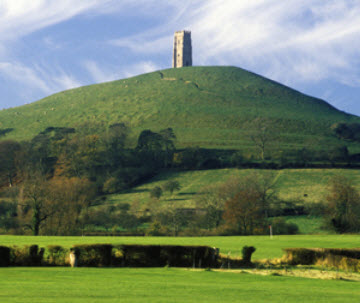
The area that we today know as Somerset has been occupied by humans since Palaeolithic times, and numerous Bronze Age and Iron Age hillforts are found in Somerset – including Ham Hill, Solsbury Hill and Cadbury Castle. Several of these ancient hillforts continued to be in use during the Roman Era and in Medieval times.
Roman occupation
The Second Legion Augusta invaded Somerset in 47 AD, as a part of the ongoing expansion of the Roman Empire. Somerset were to remain a part of the empire until the early years of the 5th century AD, when Roman occupation of Britain ended. The city of Bath in north-eastern Somerset derives its name from the baths created by the Romans around the naturally occurring springs circa 60 AD.
Anglo-Saxons
By 600 AD, Anglo-Saxons had established control over much of what is now England, but Britons in Somerset resisted the Saxon’s for some additional time. It wasn’t until the early 8th century that the Saxon king Ine of Wessex took control of Somerset and included the area in his West Saxon Kingdom.
Normans
After the Norman Conquest of Somerset, the county was divided into 700 fiefdoms. Fortifications such as Dunster Castle became important centres for Norman forces dedicated to controlling Somerset.
Dunster Castle
Dunster Castle, perched atop a steep hill in the picturesque village of Dunster in Somerset, England, stands as a testament to centuries of architectural and historical evolution. This ancient, motte-and-bailey castle has been transformed over the ages, from a medieval fortress to a lavish Victorian family home. Today, it offers a blend of history, natural beauty, and architectural mastery to all who visit.
H2: Historical Overview
Dunster Castle’s origins can be traced back to shortly after the conquest of England in 1066. The castle underwent numerous changes throughout the medieval period, reflecting the turbulent times, strategic needs, and the varying tastes of its owners.
By the 19th century, the castle, now owned by the Luttrell family, underwent significant Victorian refurbishments. These architectural changes transformed it from a military fortress into a luxurious, modern residence, albeit one deeply respectful of its storied past.
English Civil War
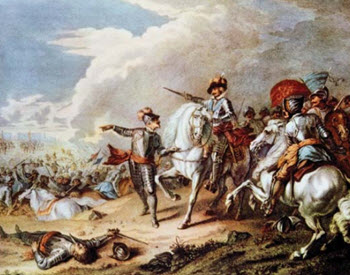
During the English Civil War, Somerset was largely Parliamentarian. Examples of important clashes between Parliamentarian and Royalist forces in Somerset are the three Sieges of Taunton and the Battle of Langport.
The West Country Rebellion
The West Country Rebellion – also known as The Revolt of the West or The Monmouth Rebellion – was an attempt to remove King James II from the throne of England, Scotland and Ireland and replace him with Charles It’s illegitimate son James Scott, 1st Duke of Monmouth. The rebellion was largely played out in Somerset and in neighbouring Dorset, with the rebels being defeated at the Battle of Sedgemoor in Westonzoyland. This was the last pitched battle found in England.
Forex trading in the UK
The Euro is a popular currency on the Forex market.
Forex trading is an abbreviation of foreign exchange trading. Foreign exchange trading refers to trading on the foreign exchange market. A market where currencies are bought and sold. This is done by companies that need a certain currency to pay suppliers in other countries. Banks, financial institutions and retail investors trade on the forex market to earn money from the fluctuating exchange rates on the market. The forex market is very liquid and somewhat volatile. The exchange rates are always fluctuating. This makes the forex market an ideal market for day traders. The high liquidity allows you to close your positions at any time and the volatility allows you to make money from the constantly fluctuating exchange rates.
UK residents that want to try forex trading need an account with a retail forex broker. It is always best to choose a FCA regulated broker. This guarantees that the broker adheres to UK law. You should also look for a broker that is known for good customer service and that charges low fees. Low fees make it easier to make money in the forex market and good customer service guarantees that you get good help if you experience any problems.
Please note that forex trading is high risk trading and you should make sure to learn as much as possible before you start trading. Use a demo account to try your trading strategies before you deposit any money to your account.
First World War
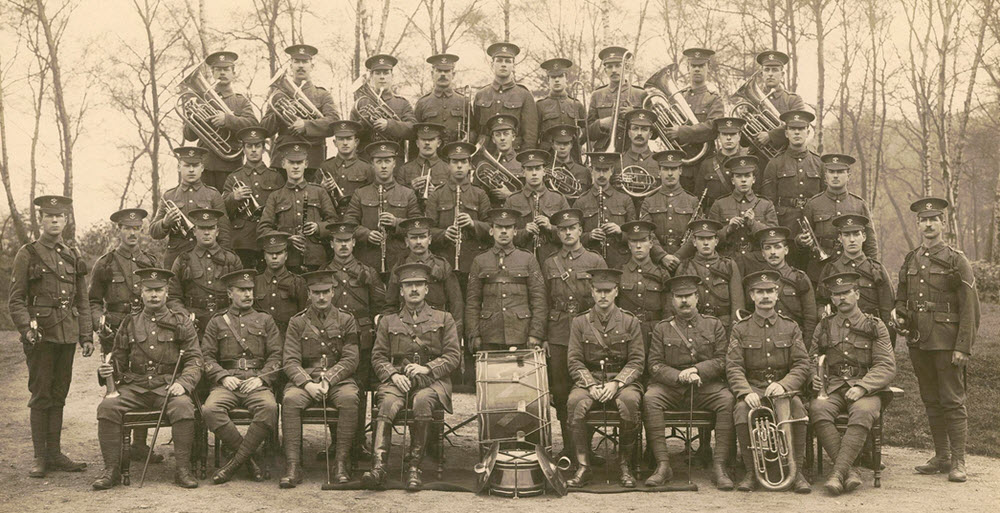
In the First World War, the Somerset Light Infantry suffered almost 5,000 casualties. War memorials were erected in most of the towns and villages, except for the nine villages that didn’t lose even a single soldier during the war.
Second World War
During WWII, new hospitals were built in Somerset to handle the large number of injured. Somerset is also where the Taunton Stop Line of “pill boxes” was set up to hinder a possible German invasion.
Several decoy towns were built in Somerset to lure bomb planes away from the real towns, especially from Bristol which was a highly desirable target for the Germans. The decoy towns were built to mimic the outline of a blacked out town with streets and railway lines. Some of the decoy towns were fitted with dim red lights, to trick the Germans into thinking what they saw from the air was the stoking of steam locomotives.
After a first wave of Pathfinder night bombers had gone through, bales of straw soaked in creosote where lit on fire in the decoy town to make it look like the town had been bombarded. Sometimes, drums filled with oil would be lighted to make it look like the decoy town had caught ablaze. The idea was to lure the next wave of bomb planes into dropping their bombs in the same spot. At the same time, bombs dropped on real towns where quickly smothered.
One successful example of the use of decoy towns in Somerset is the Chew Magna decoy. On 2 December 1940, German planes dropped half-a-dozen bombs on this decoy. Roughly a month later, the decoy town was hit by over one thousand incendiaries.
Towards the end of WWII, Somerset was used as a base for troops preparing for the D-Day landings.
Today
Today, Somerset is an important supplier of defence equipment and technology. To provide the British Armed Forces with explosives, a Royal Ordnance Factory – ROF Bridgewater – was built between Puriton and Woolavington during the early stages of WWII. The site is no longer in use, but the tradition remains – although today’s products are considerably more high tech. There is for instance the Thales Underwater Systems and the UK Hydrographic Office and Avimo (Thales Optics).
There is also a military presence in Somerset. The Ministry of Defence keeps offices in Bath, the Royal Navy has a Naval Air Station in Yeovilton, and Norton Fitzwarren is home to 40 Commando Royal Marines. The Naval Air Station in Yeovilton is one of just two active Fleet Air Arm bases in the whole of Britain. This is where the Royal Navy keep their Lynx helicopters and the Royal Marines have their Commando Westland Sea Kings. At the time of writing, approximately 1,675 service personnel is stationed in Yeovilton.
⚔
Somerset Military History & Regimental Lineage
Key battles, county fortifications, and the campaigns of the Somerset Light Infantry from 1685 to modern times
Regiment Raised
23 June 1685
Huntingdon’s Regiment (13th Foot)
Last English Pitched Battle
Sedgemoor (1685)
Fought near Bridgwater, Somerset
Most Renowned Defense
Siege of Jellalabad
1841–1842 (First Afghan War)
Regimental Headquarters
Jellalabad Barracks
Taunton, Somerset
Date / Era
Campaign / Event
Military Significance & County Context
878 AD
Alfred’s Stand at AthelneyAnglo-Saxon Defense
King Alfred the Great retreated to the Somerset Levels, establishing a fortified marsh stronghold at the Isle of Athelney. From here, he rallied the Somerset, Wiltshire, and Hampshire fyrds to decisively defeat Guthrum’s Viking army at the Battle of Edington.
1643 – 1645
Lansdown & The Sieges of TauntonEnglish Civil War
Following the costly Royalist victory at Lansdown Hill outside Bath (1643), Parliamentarian Colonel Robert Blake defended Taunton through three brutal sieges (1644–1645), refusing to surrender and tying down thousands of Royalist troops until relieved by Fairfax.
1685
Battle of Sedgemoor & 13th Foot RaisedMonmouth Rebellion
In response to the Duke of Monmouth’s rebellion, King James II commissioned the Earl of Huntingdon to raise a regiment of foot (later the 13th Regiment of Foot / Somerset Light Infantry). The rebellion was crushed at Sedgemoor on the Somerset Levels—the last pitched battle fought on English soil.
1841 – 1842
The Illustrious Garrison of JellalabadFirst Anglo-Afghan War
Under Sir Robert Sale, the 13th Foot held the fortified city of Jellalabad against overwhelming Afghan forces and earthquakes for five months following the retreat from Kabul. Queen Victoria awarded the regiment the title Prince Albert’s, mural crown distinctions, and converted them into Light Infantry.
1881
Prince Albert’s (Somerset Light Infantry)Cardwell / Childers Reforms
The 13th Foot was officially linked to Somerset under War Office reorganization, uniting the 1st and 2nd Regular Battalions with the 1st and 2nd Somerset Militia and local Volunteer Battalions, headquartered at the newly built Jellalabad Barracks in Taunton.
1914 – 1918
The Somme, Le Cateau & MesopotamiaWorld War I Expansion
The Somerset Light Infantry expanded to 18 battalions during the war. The 1st Battalion fought at Le Cateau and the Marne, while the 1st, 6th, 7th, and 8th battalions suffered heavy casualties on the Somme and Ypres. Over 4,700 Somerset soldiers lost their lives.
1940 – 1944
GHQ Stop Line Green & Normandy BreakoutWorld War II
During the 1940 invasion scare, the Taunton Stop Line (GHQ Stop Line Green) was built across Somerset using pillboxes, anti-tank ditches, and rail roadblocks. In 1944, the 4th and 7th Battalions fought through the brutal bocage of Normandy (Hill 112) and into Germany.
1959 – Present
Modern Amalgamations & The RiflesModern British Army
The Somerset Light Infantry merged with the Duke of Cornwall’s Light Infantry in 1959 to form the Somerset and Cornwall Light Infantry (SCLI). Subsequent amalgamations created The Light Infantry (1968), whose heritage lives on today within The Rifles. Taunton remains home to the Somerset Military Museum inside Taunton Castle.
Heritage Note: The Somerset Light Infantry was unique among British Army county infantry regiments for its silver bugle horn insignia adorned with a mural crown and the battle honor “Jellalabad”, commemorating their isolated five-month winter stand in Afghanistan.